Provisional Crowns & Bridges Abroad: Protecting Temporary Restorations During Your Stay in Costa Rica
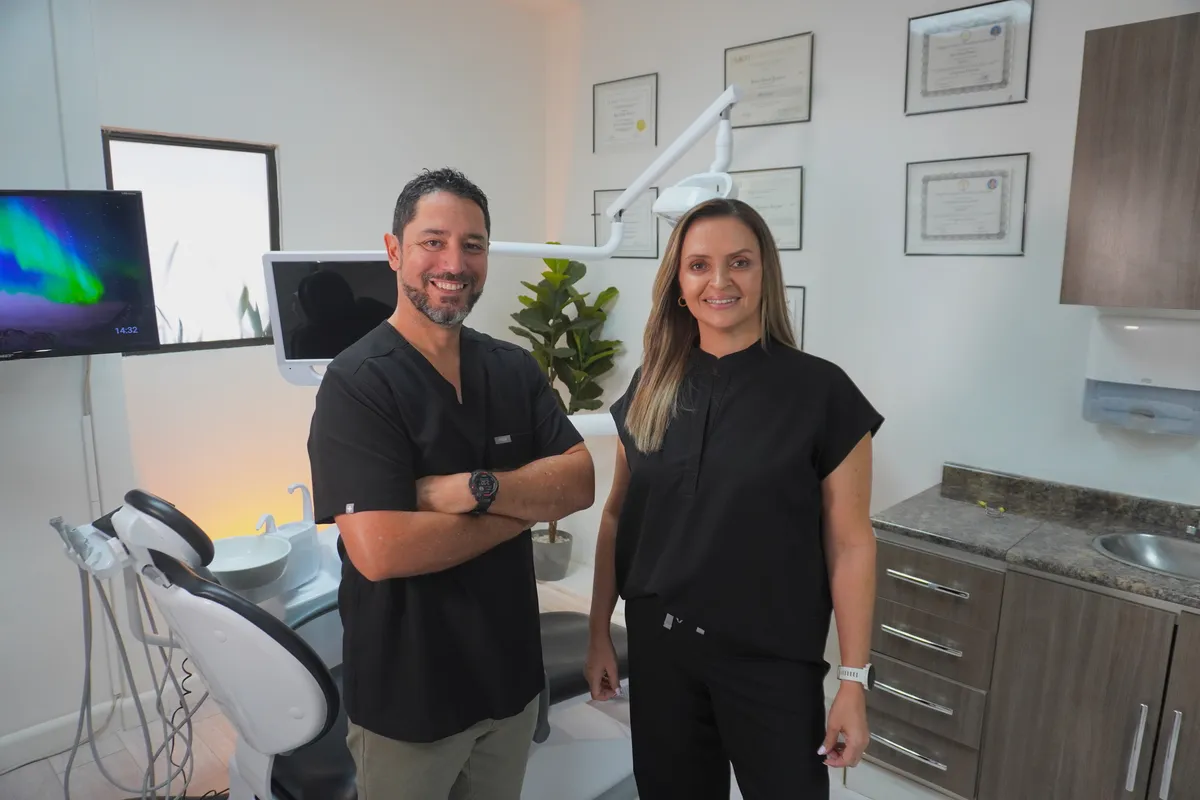
Dr. Diego Vernava & NPC Team
Doctor in Dental Surgery & Multidisciplinary Specialists
Published: 24 Nov, 2026 • 5 min read
The Clinical Relevance of Provisional Prosthetics
When undergoing restorative dentistry—whether securing a single crown, a multi-unit bridge, or transitioning toward a complex implant protocol—provisional prosthetics serve a vital biological and mechanical function. Far more than mere aesthetic placeholders, temporary crowns and bridges act as critical biological shields. They protect the underlying prepared tooth structure or healing abutments from thermal sensitivity, chemical irritation, and bacterial microleakage.
Furthermore, provisional restorations preserve precise gum contour (the gingival architecture) and maintain bite stability. Without them, adjacent and opposing teeth can shift, compromising the trajectory of your final ceramic or prosthodontic restorations. At North Pacific Clinic, situated in the heart of Tamarindo, Guanacaste, our restorative workflows under the direction of Dr. Diego Vernava and Dra. Karol Trejos ensure that every temporary restoration is engineered with exact marginal integrity while your permanent, high-precision lab components are meticulously fabricated.
Navigating Costa Rican Cuisine: Eating with Temporaries
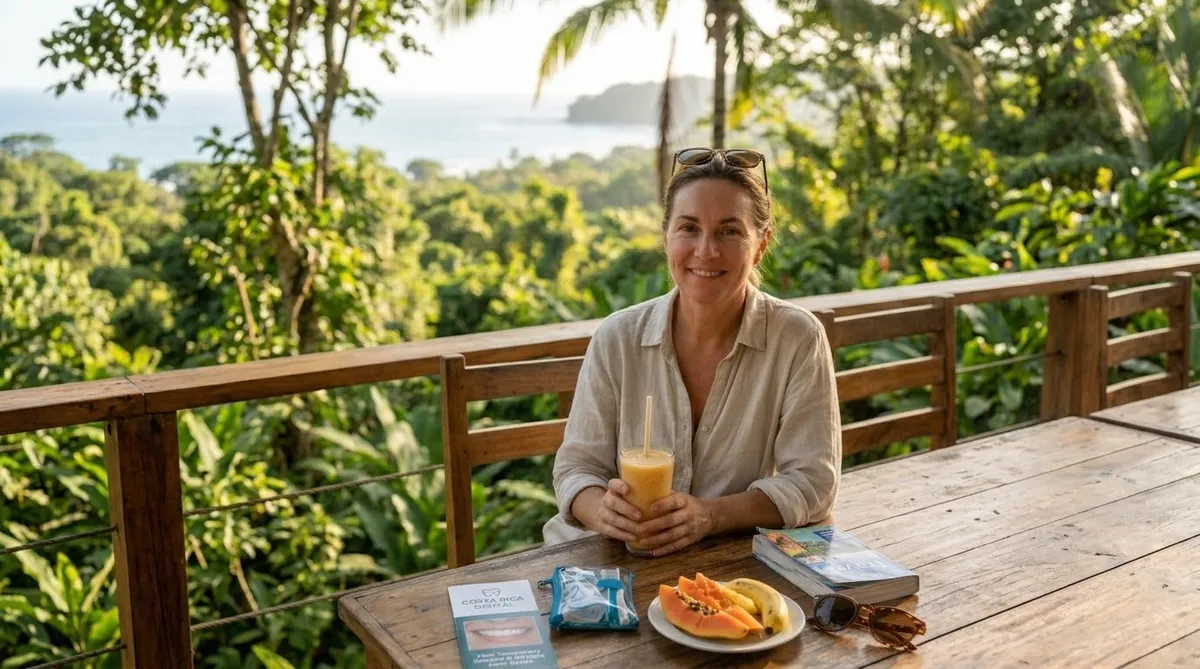
Traveling internationally for dental care offers a wonderful opportunity to experience the natural beauty and rich culture of Costa Rica, whether you are recovering along the pristine shores of Guanacaste. However, enjoying local gastronomy requires a mindful approach when wearing provisional materials, which are intentionally retained with temporary luting cement.
To protect your temporaries, opt for soft, nutrient-dense, and non-sticky local meals. Excellent choices include:
- Mashed sweet plantains (maduros) or local root vegetables
- Tender, locally caught white fish prepared gently
- Fluffy scrambled eggs and ripe, soft tropical fruit bowls
Conversely, keep hard crusty breads, tough meats, ice, and sticky sweets or caramel away from provisional margins. Adopting these conservative habits ensures your temporary remains securely in place throughout your stay.
Precautions & What to Do If a Temporary Loosens
Even with meticulous care, the forces of mastication or unexpected structural stresses can occasionally dislodge a temporary restoration. The primary rule in such an event is absolute composure. Avoid biting directly into hard, crunchy, or fibrous items, exercise caution with chewing gum, and never attempt to force a dislodged temporary back into place using household adhesives, superglue, or over-the-counter quick fixes.
If a provisional crown or bridge comes loose, carefully remove it from your mouth, store it safely in a clean container, and contact our clinical team immediately. Because North Pacific Clinic is fully equipped to handle international patient logistics—with treatment timelines averaging seven business days for crown and bridge work in Guanacaste—our team can swiftly provide professional recementation or adjustment, preserving your biological preparation without disrupting your travel itinerary.
Preparing for Your Final Seat and Comprehensive Bite Check
The transition from provisional prosthetics to your final, permanent restoration is a momentous milestone in your clinical journey. At North Pacific Clinic, we utilize US FDA- and EU-approved materials, complying strictly with rigorous North American biosecurity standards. During your final seating appointment, our multidisciplinary team evaluates three non-negotiable parameters:
- Marginal Fit: Ensuring an immaculate seal between the restoration and the natural tooth structure to prevent microleakage.
- Shade Harmony: Verifying that the color, translucency, and light-reflection match your adjacent natural smile.
- Occlusal Balance: Analyzing your bite dynamics to guarantee even distribution of force across the jaw.
To accommodate these meticulous evaluations and allow for any minor, custom laboratory adjustments, we strongly advise patients to build an extra day into their travel itinerary before departing Costa Rica.
Bonus Takeaway: The North Pacific Clinic Provisional Restoration Care Card
Safe vs. Risky Foods: Stick to soft fish, eggs, and fruit bowls. Avoid hard crusts, sticky candies, nuts, and ice.
Gentle Cleaning Tips: Brush gently twice daily. When flossing around a provisional bridge, pull the floss out sideways rather than snapping it upward to avoid dislodging the margins.
Emergency Protocol: If a temporary loosens, store it safely in a hard case. Do not use household glue. Call or message our clinic immediately for professional intervention.
Backed by over two decades of serving the Tamarindo community, North Pacific Clinic seamlessly merges world-class restorative dentistry, cosmetic enhancements, and integrative wellness—all while offering substantial cost efficiencies of 50% to 70% compared to US and Canadian pricing. Whether you are flying into Liberia (LIR) and seeking our comprehensive airport transfer support and partnered accommodations at Tamarindo Bay Hotel, Antema Lodge, or Hotel Seis Playas, or coordinating care alongside our specialists in endodontics, maxillofacial surgery, and integrative medicine (such as Dr. Mariana Trejos), your clinical comfort is our highest priority.
Begin your restorative journey with our clinical team today. Contact us via WhatsApp at +506 8332 4004 or call the clinic directly at +506 2652 9016 to arrange a virtual or in-person consultation.