What Is an OligoScan Test and How Does It Work?
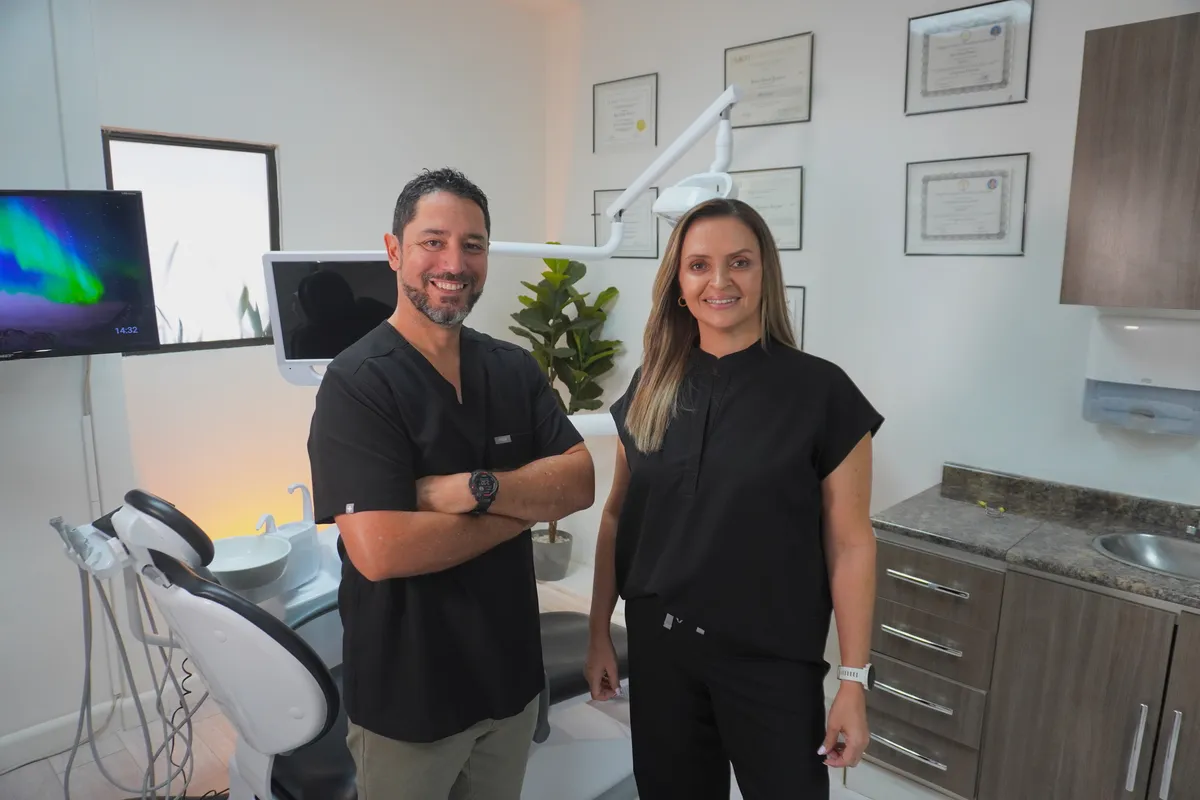
Dr. Diego Vernava & NPC Team
Doctor in Dental Surgery & Multidisciplinary Specialists
Published: 23 Jul, 2026 • 5 min read
What Is an OligoScan Test and How Does It Work?
Most people come to us with a version of the same question: I take supplements, I try to eat well, I have done blood work — so why do I still feel this way? Or, on the other end: I feel fine, but is there anything I should be paying attention to before it becomes a problem?
The OligoScan is one of the tools we use to help answer both. It is not a magic test, and it does not replace clinical judgment or laboratory work. What it does is give us a fast, painless snapshot of what is happening at the cellular level — information that helps us make better decisions instead of guessing.
What the OligoScan measures
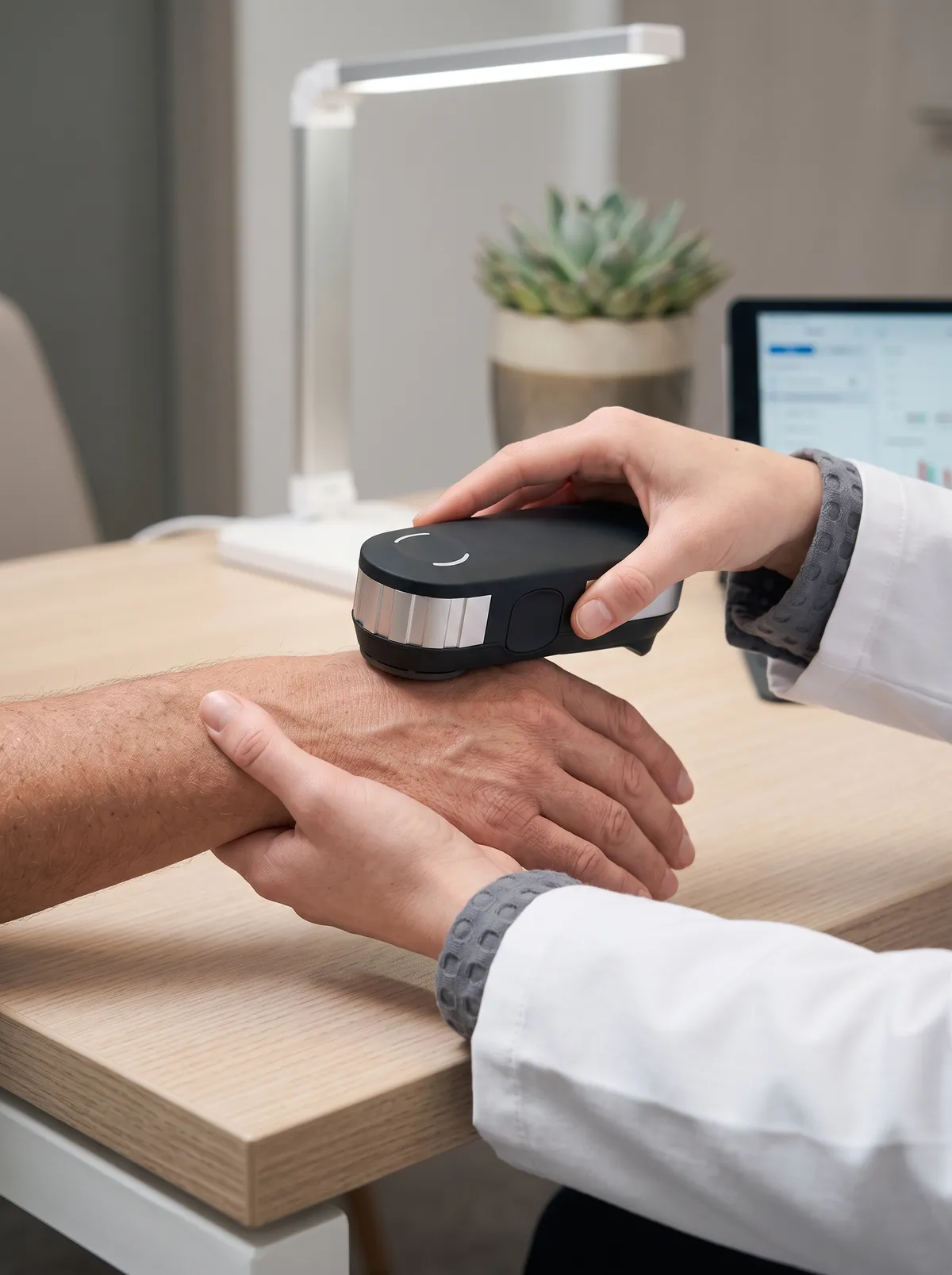
The OligoScan works by spectrophotometry. A specialized light beam is applied to the tissue and the way that light is absorbed is analyzed against reference data to estimate the presence of heavy metals, minerals, and certain vitamins at the intracellular level.
The word we use in consultation is photograph. It gives us an image of how the body is doing overall — a reference point that helps orient our search, guide preventive care, and, above all, keep patients from taking supplements or intravenous therapy without a specific purpose behind it.
It is a fast, safe, and painless strategy that gives us a great deal of information.
What the test is actually like
This is the part that surprises most patients, because they expect something complicated.
• The reading is taken on the palm of the hand.
• It is completely painless — there are no needles and no discomfort.
• It takes only seconds.
• The only preparation required is knowing your blood type.
• Results are available immediately, and we review them together during your appointment.
There is no fasting, no recovery, and no waiting days for a report to come back. You leave already understanding what was found and what it means for you.
Who benefits from an OligoScan
In principle, every patient can benefit from having this information. In practice, there are profiles where it changes our clinical thinking the most:
• Women in perimenopause and menopause, where symptoms are multifactorial and nutritional status directly influences how the transition is experienced.
• Patients with chronic fatigue, particularly when the usual work-up has not explained the full picture.
• People who feel well and want to optimize their health — prevention, not repair.
• Athletes, whose mineral demands, sweat losses, and hydration balance are significantly higher than average.
You do not need to be unwell to justify the test. A good part of its value is precisely in the patient who feels fine and wants to stay that way.
What we do with the results
The OligoScan is a starting point, not an endpoint. Once we have that image in front of us, it becomes one input among several:
• It helps us decide which additional studies are worth requesting — blood work, hormonal panels, metabolic markers.
• It is interpreted alongside your history, your symptoms, and your existing laboratory results, never in isolation.
• From that combined picture we build a personalized plan, which may include targeted supplementation, intravenous therapy, hydration strategy, and dietary adjustments.
• We repeat the scan over time to see whether what we changed is actually moving in the right direction.
That last point matters. A plan you cannot measure is a plan you cannot correct.
What the OligoScan is not
We are direct about this with every patient, because expectations should be accurate from the beginning.
The OligoScan is not a diagnostic test, and it does not deliver absolute values. It is a complementary tool that gives us an image of how your cells may be functioning. It supports a clinical process — it does not replace formal laboratory testing, clinical toxicology, or medical judgment.
Any test presented as a device that diagnoses everything by itself should be met with healthy skepticism. This one is useful precisely because we know what it is for and what it is not.
Heavy metals: exposure is universal
Heavy metals tend to be the part of the report that causes the most anxiety, so we frame it clearly from the start.
We are all exposed. Heavy metals are present in the environment, in food, in packaging, in cosmetics, in water — this is a fact of modern life and not a personal failure. In our practice, the element that most consistently appears elevated is aluminum.
What matters most is not whether the body is exposed, but whether the body knows how to excrete what it is exposed to.
That is where our attention goes: supporting the body's natural elimination pathways — hydration, mineral status, liver and kidney function, and reducing avoidable sources of exposure. When levels are genuinely high, chelation is available and appropriate in selected cases. It is a specific clinical decision, not a routine response to any detectable value.
What we commonly find in Guanacaste
Patterns emerge when you run enough of these. The findings we see most often in our patient population are:
• Vitamin D deficiency, especially in women — which surprises people, because we live in a place with abundant sun year-round. Living in the tropics does not guarantee adequate vitamin D status.
• Magnesium deficiency, which is relevant to sleep, muscle function, stress response, and glucose metabolism.
• Low silicon, an often-overlooked mineral involved in connective tissue, skin, hair, and nails.
• Dehydration reflected in the sodium–potassium relationship — very common in a hot coastal climate, and frequently underestimated by people who believe they drink enough water.
These findings are useful because they are actionable. They also explain why generic supplement protocols so often miss: the profile of a patient in Tamarindo is not the profile assumed by a product designed for a different climate and a different diet.
A clinical example
One case illustrates the value of the test better than a general explanation.
A patient with PMOS (Polyendocrine Metabolic Ovary Syndrome, formerly known as PCOS) had already made substantial lifestyle changes and was on treatment, yet continued to show insulin resistance that was difficult to manage. On paper, we were doing the right things, and the response was not what we expected.
The OligoScan pointed us toward mitochondrial function and chromium status. That finding helped us understand her particular expression of the syndrome more fully, and allowed us to complement her existing treatment rather than repeat what was not working. Her results improved from there.
This is what the test is for: not to replace the plan, but to explain why the plan was incomplete.
Our position on supplements and IV therapy
Both extremes are a problem. Deficiency is a problem, and excess is a problem. The body is intelligent — it looks for what it needs and works to eliminate what it does not. Our job is to support that intelligence with accurate information, not to override it with more products.
Self-directed supplementation based on social media rarely accounts for what a specific body actually lacks. Taking a supplement you do not need is, at best, an unnecessary expense, and at worst an imbalance you did not have before.
The same principle applies to intravenous therapy. IV therapy is a valuable tool, and we offer it — but its value comes from indication. When it responds to a documented finding and a defined clinical objective, it is precise, efficient medicine. When it is administered as a generic wellness drip with no prior assessment, we are simply guessing through a vein.
The goal is not more supplementation. The goal is the right supplementation, for the right reason, for the right amount of time.
Schedule your appointment
The OligoScan is one of the services available at North Pacific Clinic in Tamarindo, Guanacaste. Results are reviewed with you during the same visit.
To book: +506 8522 7111
This article is for educational purposes and does not constitute a medical diagnosis or an individual treatment recommendation. Any assessment or therapy should be evaluated in consultation with a qualified healthcare professional.